
As the National Council for Higher Education (NCHE) convenes this month to consider key matters on its agenda, one decision carries profound significance not just for a region, but for the broader question of equity in Uganda’s education system. That decision concerns the application by promoters of Karamoja Peace and Technology University (KAPATU) for a provisional licence.
For Karamoja, this is not merely an administrative process; it is a long-awaited opportunity to bridge a historical gap.
Uganda’s higher education landscape has expanded steadily over the decades, with close to 60 universities spread across the country, including 10 public institutions. From Makerere University in Kampala, established in 1922, to newer institutions such as Muni University in West Nile and Mountains of the Moon University in Tooro, nearly every sub-region now hosts a university serving its population’s academic and developmental needs.
Yet Karamoja remains a glaring exception.
More than a century after the sub-region was incorporated into Uganda in 1911, and over 100 years since Makerere opened its doors, Karamoja still lacks a university. This absence is not just symbolic—it has real consequences for access to education, human capital development, and regional transformation.
The case for KAPATU is therefore both urgent and compelling.
According to its promoters, the university has met the core requirements for a provisional licence. Infrastructure is in place, including lecture facilities, a library, laboratories, student accommodation, and sufficient land. Academic programmes have been designed, and the institution is ready to begin operations pending regulatory approval.
But beyond infrastructure, the argument for KAPATU is fundamentally about fairness.
Government policy has increasingly leaned toward establishing a university in every sub-region—not as an exercise in regional balancing for its own sake, but as a practical strategy to expand access to higher education. The Vice President has reiterated this position, while the President has previously indicated that KAPATU could evolve into a nucleus public university in the future.
Granting a provisional licence now would be a logical first step toward that vision.
The transformative potential of such an institution in Karamoja cannot be overstated. Access to a university within the region would ease the financial and social burden on families who struggle to send their children to distant institutions. It would also improve school completion rates by giving learners a realistic pathway to higher education within their reach.
Equally important, KAPATU could serve as a catalyst for socio-economic change. By equipping students and local communities with practical skills—particularly in areas like financial management, technology, and entrepreneurship—the university would complement existing government programmes such as the Parish Development Model (PDM), Emyooga, and the Youth Livelihood Programme.
In regions historically affected by marginalisation, education is more than a service—it is a stabilising force. Increased literacy, reduced school dropout rates, and expanded economic opportunities are all linked to long-term peace and development. In Karamoja’s case, the presence of a university could contribute to reducing cross-border insecurity and fostering a more resilient society.
Critically, KAPATU should not be viewed through a narrow commercial lens. Its value lies not in profit, but in its potential as a tool for inclusion, empowerment, and regional integration.
The NCHE now has an opportunity to make a decision that aligns with both national policy and the principles of equitable development. Granting KAPATU a provisional licence would not only unlock immediate academic activity but also signal a commitment to ensuring that no region is left behind in Uganda’s educational journey.
For Karamoja, that signal is long overdue.
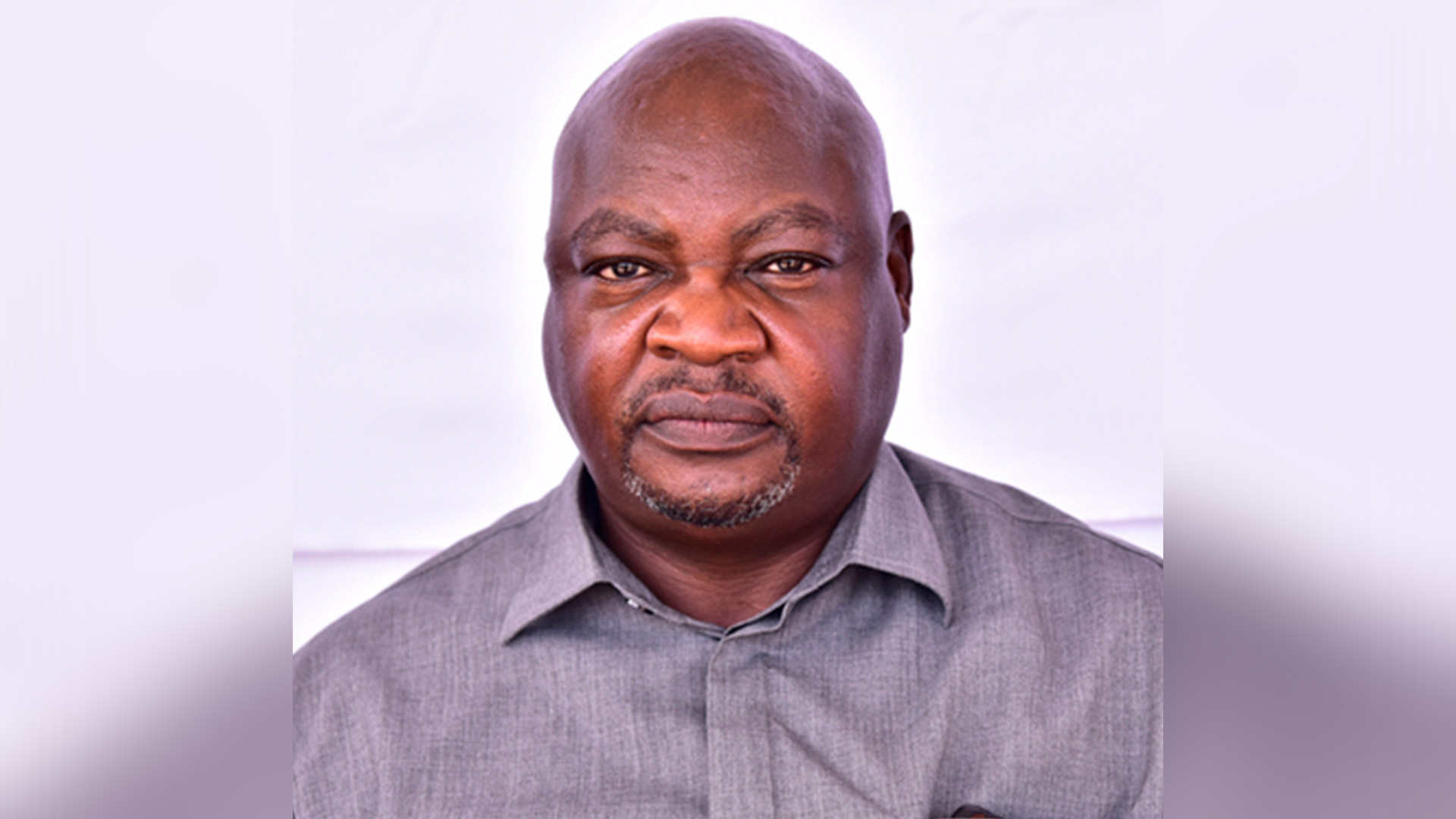
The writer is the Member of Parliament for Jie County and a promoter of KAPATU.
ABOUT KAPATU
KAPATU is a Nucleus National Public University established jointly by the Roman Catholic Dioceses of Kotido and Moroto, the Catholic Lawyers Society International (CLASI), headed by its president, Counsel Severino Twinobusingye, and the government of Uganda. Its main campus is situated at Losilang, Kotido municipality (Karamoja). The initiative aims to foster peace and sustainable development in the region through education.
It was conceived in 2014 but actualised on 29th April, 2023, in a colourful ceremony at Nsambya presided over by the Vice President of Uganda, H.E. Maj. Jessica Rose Epel Alupo, who represented H.E. the President. The KAPATU project is being overseen by a Strategic Leadership Committee comprising President Yoweri Kaguta Museveni (Chair/Founding Chancellor), Vice President Jessica Rose Epel Alupo (Founding Deputy Chancellor), and First Lady, also Minister for Education and Sports, Maama Janet Kataha Museveni.
The government has, in the FY2025/26, allocated Shs180bn for the university’s establishment following a special cabinet sitting on 16th December 2024, chaired by H.E. the President and also attended by H.E. the Vice President.